WorkShared infrastructure, then teardown
Ventora Platform
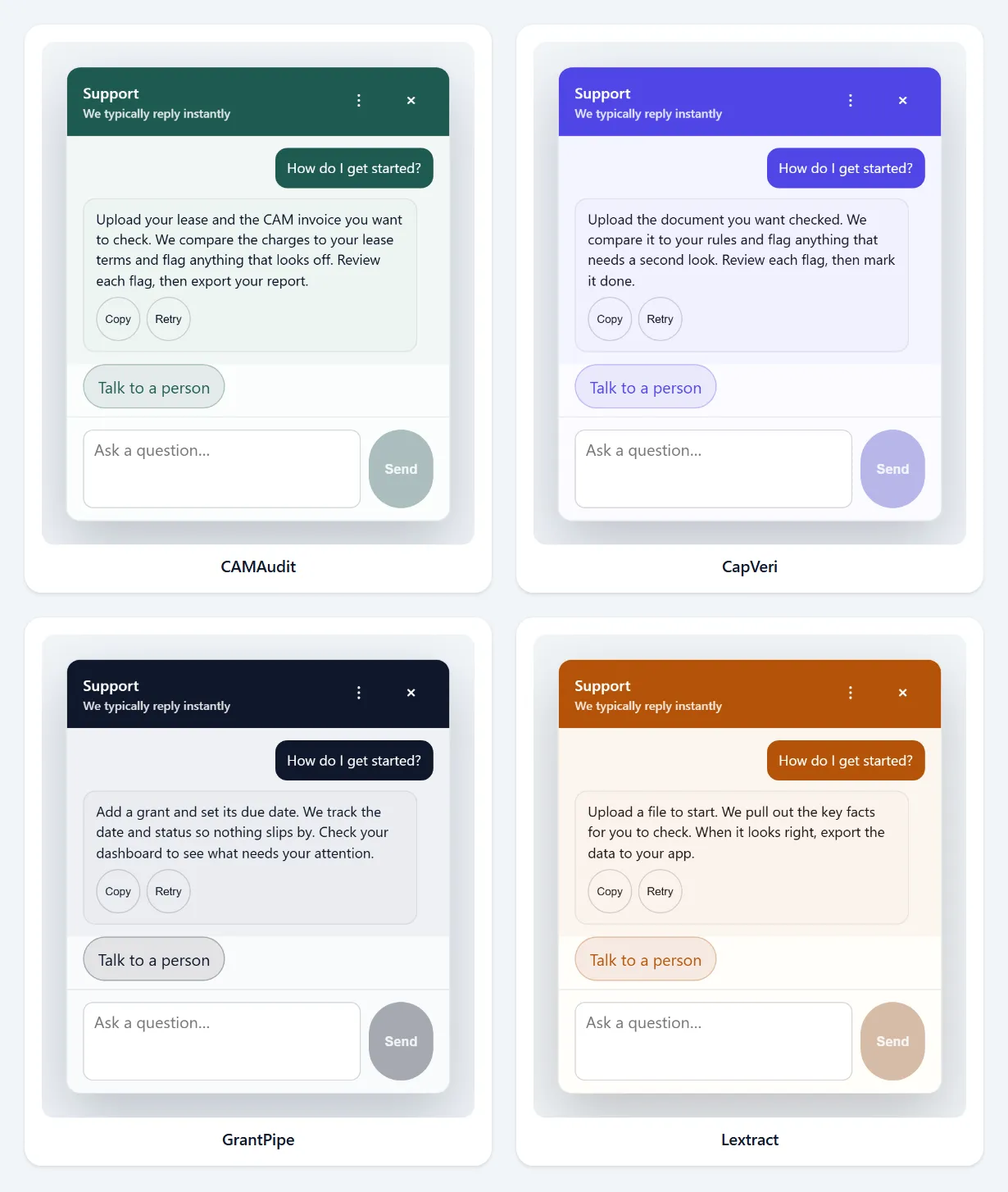
Shared infrastructure for analytics, auth, billing, storage, email, and two AI support widgets, which other products in the estate depended on as private packages instead of each rebuilding its own.
- Ran on
- Cloudflare Workers
- Ran
- May 2026 to July 2026
- Domain
- Shared platform infrastructure
That platform choice is part of a longer migration: Azure, then Railway, then Cloudflare, across the whole estate. Read how and why.
Built with
- TypeScript
- Python
- Cloudflare Workers
- Durable Objects
- R2
- Better Auth
- Stripe
- PostHog
Hosted services
- Durable Objects
- R2
The decision
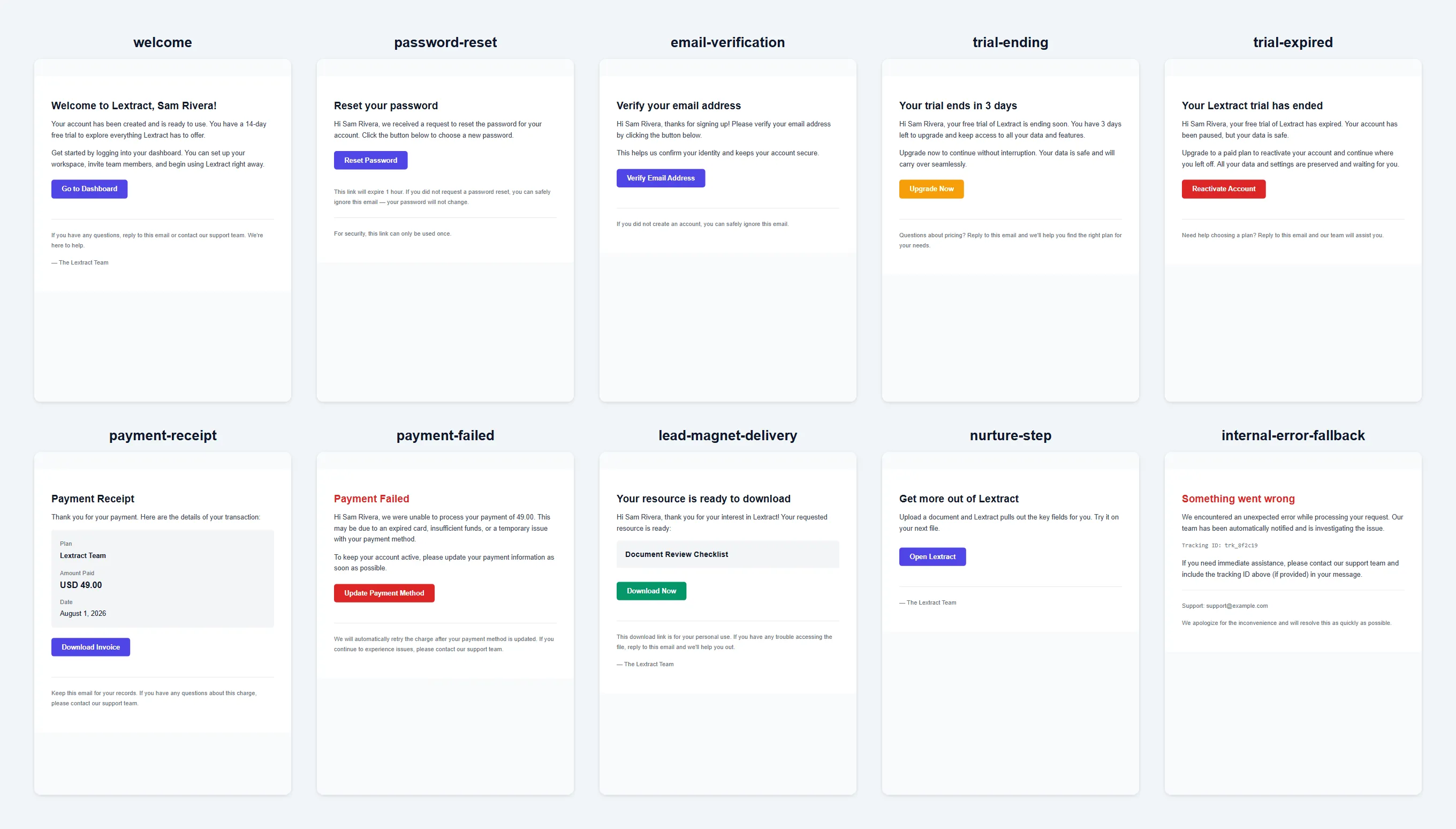
Python code in Ventora sent email by posting a signed payload to a small Cloudflare Worker,
email-renderer, which rendered the real React Email templates and returned HTML and text. The
alternative was a second template set in Python that would have drifted within a month.
Half of Ventora’s consumers were TypeScript and half were Python, and most of the cross-language contract (analytics event names, PII redaction rules) was solved by generating both languages from one JSON schema and byte-comparing the output in the verify gate, so the two runtimes could not drift apart quietly. React Email templates are React, so email rendering used a different solve for the same problem: the Worker above let the Python client call the real templates directly, over an HMAC-signed bridge, keeping both languages rendering from one source.
The parity that mattered on the email path was byte parity of the string that gets signed. The
Python client serialized timestamp, nonce, method, path, and body in exactly the key order the
Worker used to rebuild the same string, so json.dumps(separators=(",", ":")) and JSON.stringify
had to agree byte for byte or the HMAC failed.
An end-to-end test booted the real Worker under wrangler dev and drove the real Python client
against it, so that agreement was proven rather than asserted. The cost was a network hop and a
Worker kept alive for a single template render, in exchange for a signature scheme proven correct
across both languages before it shipped.
Architecture
Everything in the repository except five packages was published as a versioned package and consumed as a private dependency by other products; nothing else here was a deployment target in its own right.
The five exceptions were the deployed Cloudflare Workers. email-renderer let Python render React
Email templates without a JS runtime, over the HMAC-signed bridge above. ai-sdr-worker held
anonymous marketing-assistant session state in a Durable Object, with a durable outbox and an
alarm-driven retry ladder (0s, 30s, 2m, 10m, 1h) so a streaming reply never waited on a lead push to
a product’s CRM.
ai-cs-worker served the authenticated in-app support assistant, fetching a signed per-app context
from the product and still treating the payload as untrusted, sanitized and length-capped before it
reached a prompt. package-registry and python-registry were a private npm registry and a private
PEP 503/691 Python index, both implemented from scratch on R2, so every other package in the
monorepo had somewhere to publish to and install from without a third-party registry in the loop.
Two widgets, two rules for model output
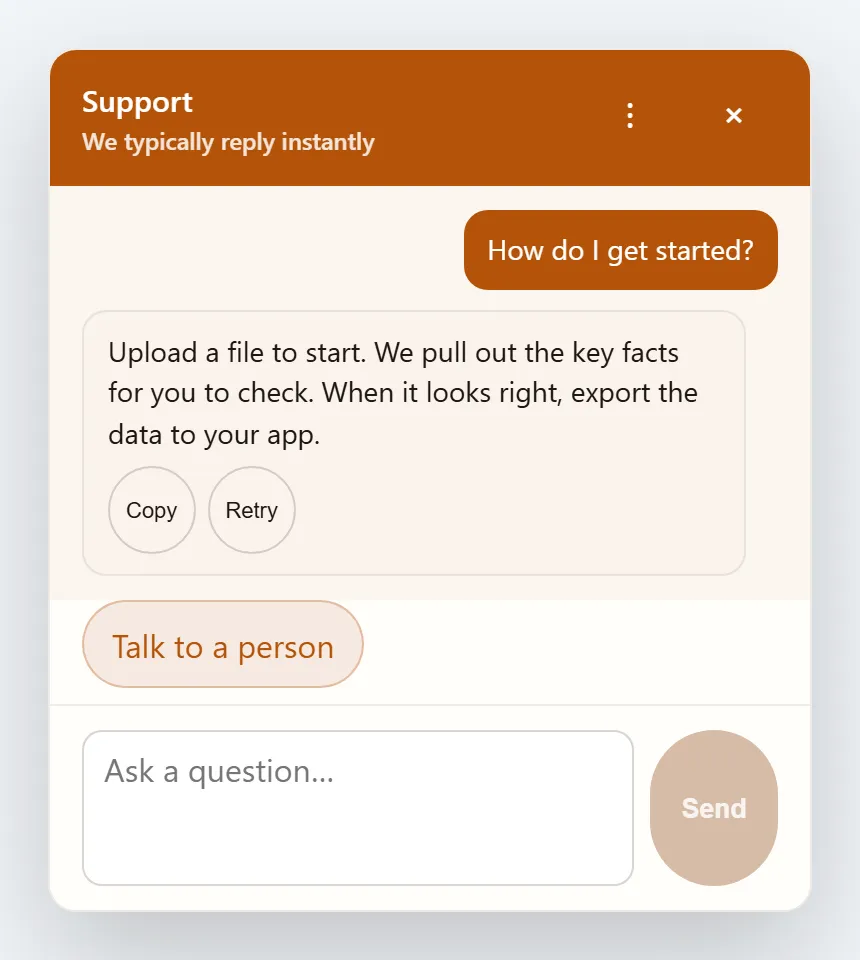
The hosted AI-CS client, the vanilla-JS build every product embedded on its own marketing pages,
rendered every assistant reply through textContent, never innerHTML
(packages/ai-cs-worker/src/hosted-client.ts). There was no markdown parser in that path at all,
by design: model output landed on a page the widget did not control, so the safest rule was to
never interpret it as markup.
@ventora/ai-cs, the React package a product could embed inside its own authenticated app, took
the other side of that choice and rendered markdown, through a closed whitelist parser
(packages/ai-cs/src/react/markdown.tsx) whose own docstring stated it was “XSS-safe by
construction” and never called dangerouslySetInnerHTML. The parser’s behavior under partial input
was asserted in the package’s own tests: its inline pattern only recognized a **bold** span once
both delimiters had arrived, so a reply captured mid-stream, before the closing ** streamed in,
showed literal asterisks for a moment, exactly as the tests expected. One client stripped
formatting on purpose, the other rendered it once it could prove it was safe to.
Verification
pnpm verify chained nine steps: a schema check, a metrics check, a secret scan, script tests,
lint, typecheck, coverage enforced per file across 19 vitest configs and 6 Python packages, and two
smoke suites that installed the built TypeScript and Python artifacts and imported them the way a
product would. The in-process Worker E2E tier and the Playwright browser E2E tier were split out
as their own commands, run on demand, so the fast local gate stayed fast.
By the numbers
Each figure carries where it came from and when it was measured. Open one to see the command behind it, where the repository recorded a command.
- Packages and Workers
- 20 TypeScript packages, 6 Python packages, 5 deployed Cloudflare Workers
Provenance
Source portfolio/METRICS.md § Scale
Measured
- Project lines
- 92,119 lines across 442 files (lockfiles excluded)
Provenance
Source portfolio/METRICS.md § Scale
Measured
- Source code
- 21,740 TypeScript source lines · 8,039 JavaScript · 4,656 Python
Provenance
Source portfolio/METRICS.md § Source versus test, by package
Measured
- Test code
- 39,822 TypeScript test lines (64.7% of TypeScript) · 3,962 JavaScript · 4,680 Python (50.1% of Python)
Provenance
Source portfolio/METRICS.md § Source versus test, by package
Measured
- Test cases declared
- 2,059 vitest · 448 pytest cases expanding to 472 executed under @pytest.mark.parametrize · 227 node:test
Provenance
Source portfolio/METRICS.md § Scale
Measured
- Coverage floor
- 95% lines, branches, functions, statements, enforced per file across 19 vitest configs and 6 Python packages
Provenance
Source portfolio/METRICS.md § Scale
Measured
- Cross-language contract
- 46 analytics events, 35 redaction field keys, 7 patterns: generated into both TypeScript and Python and byte-compared in the gate
Provenance
Source portfolio/METRICS.md § Scale
Measured
- Zero-runtime-dependency packages
- 18 TypeScript packages
Provenance
Source portfolio/METRICS.md § Scale
Measured
- Verification gate
- pnpm verify chained nine steps, ending with two consumer harnesses that installed the built artifacts and imported them the way a product would
Provenance
Source README.md § Worth reading: A gate you can actually run
Measured
Screens
Its portfolio/ directory holds the architecture, metrics and testing documents these figures were taken from.