WorkShared infrastructure, then teardown
Ventora Sequencer
Ran multi-day email sequences on behalf of other products, sending real mail through one Durable Object per enrollment that scheduled its own next step.
- Ran on
- Cloudflare Workers
- Ran
- May 2026 to July 2026
- Domain
- Multi-tenant email sequencing infrastructure
That platform choice is part of a longer migration: Azure, then Railway, then Cloudflare, across the whole estate. Read how and why.
Built with
- Cloudflare Workers
- Hono
- Durable Objects
- D1
- Drizzle
- Queues
- Cloudflare Access
- React 19
- Resend
Hosted services
- D1
- KV
- R2
- Queues
- Durable Objects
- Analytics Engine
- Cron Triggers
- Cloudflare Access
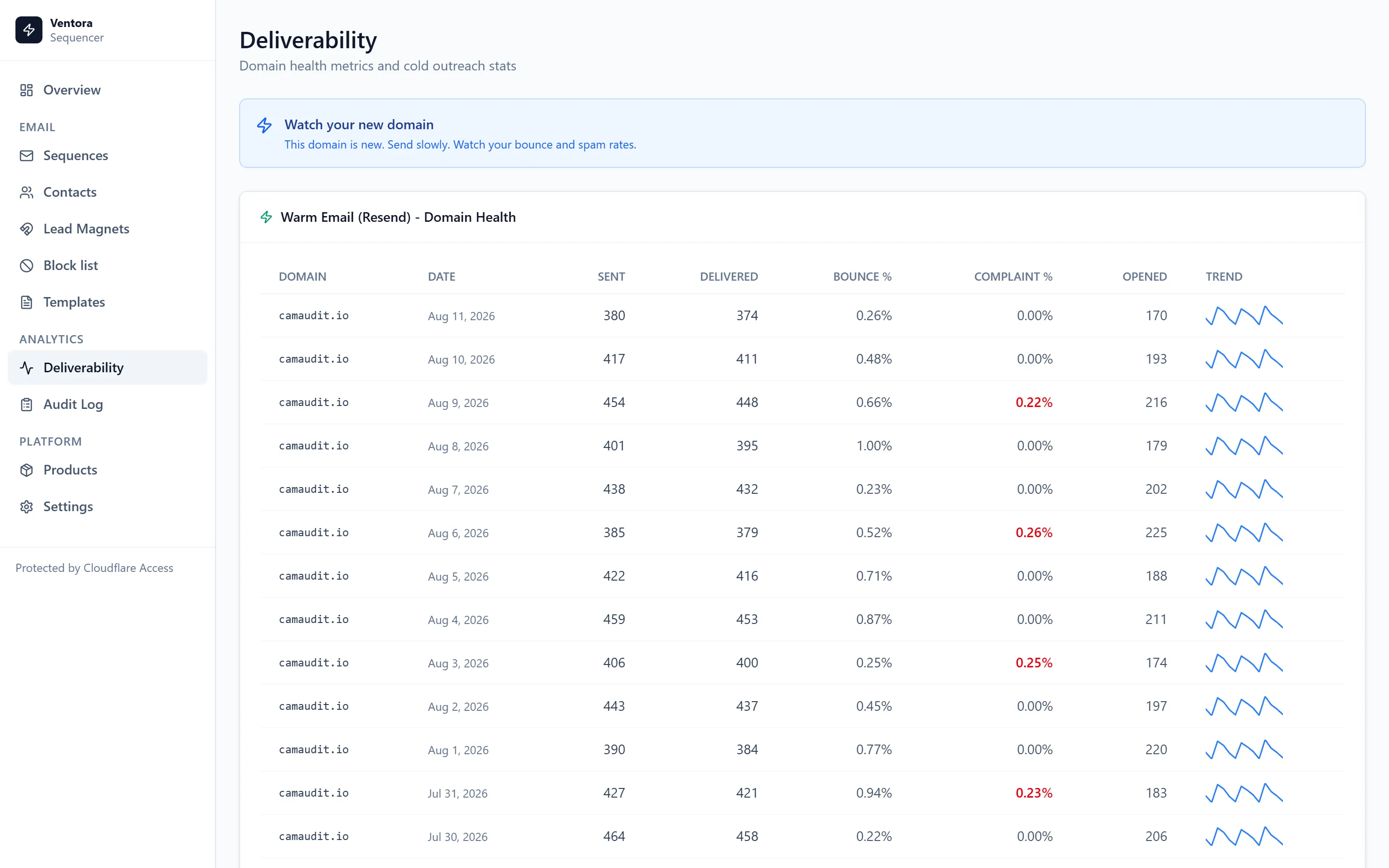
The decision
The send path was defended four times over, because Cloudflare guarantees a Durable Object alarm fires at least once, not exactly once. An alarm handler that crashes after sending an email but before recording that it sent is simply retried, with no memory of the first attempt. Every other failure in this system was recoverable; a duplicate email to a stranger was not.
Each layer assumed the others would eventually be wrong. The Durable Object refused to re-enter a step already marked sent. A crash between writing the message and writing the step was repaired by looking for the orphaned message rather than guessing which way to resolve it.
Two unique database indexes made a duplicate message physically unrepresentable, one step to one message by constraint rather than convention. If all three failed anyway, the outbound call to Resend still carried an idempotency key derived from the run and step, so an identical retry produced an identical key the provider would collapse on its own.
Architecture
Everything ran on one Cloudflare Worker: the product API, the operator dashboard’s static assets,
the provider webhook endpoints, a queue consumer, four cron jobs, and one Durable Object per
enrollment whose alarm() handler was the state machine driving that person through their sequence.
Three authentication regimes coexisted on that single Worker, decided by URL prefix. The product API and the operator dashboard both delegated authentication entirely to Cloudflare Access (service tokens for the former, Google IdP plus an email allowlist for the latter), so there was no login form, session, or password anywhere in the application code. Provider webhooks and the one-click unsubscribe link verified themselves instead, with HMAC signatures the Worker checked directly.
By the numbers
Each figure carries where it came from and when it was measured. Open one to see the command behind it, where the repository recorded a command.
- Authored TypeScript, excluding generated
- 28,702 LOC across 156 files
Provenance
Source portfolio/METRICS.md § Code size
node scripts/dev/portfolio-metrics.mjsMeasured
- Test code
- 40,192 LOC across 151 files (a 1.40:1 ratio against source)
Provenance
Source portfolio/METRICS.md § Code size
Measured
- Tests
- 1,747 passing across 149 files, plus 14 Workers-runtime system tests booted against real D1, R2, KV, Queue and Durable Object bindings, not mocks
Provenance
Source portfolio/METRICS.md § Tests and coverage
pnpm testMeasured
- Dashboard coverage
- 99.58% statements, 98.43% branches, 97.51% functions, gated per file at 95/95/90 rather than as a repository average
Provenance
Source portfolio/METRICS.md § Tests and coverage
pnpm test:web:coverageMeasured
- Database
- 21 D1 tables, 33 migrations, 30 indexes (18 plain, 12 unique)
Provenance
Source portfolio/METRICS.md § Content
Measured
- HTTP surface
- 30 internal dashboard endpoints, 10 product API endpoints, 2 provider webhooks, across 3 separate auth regimes
Provenance
Source README.md § By the numbers
Measured
- Sequence content
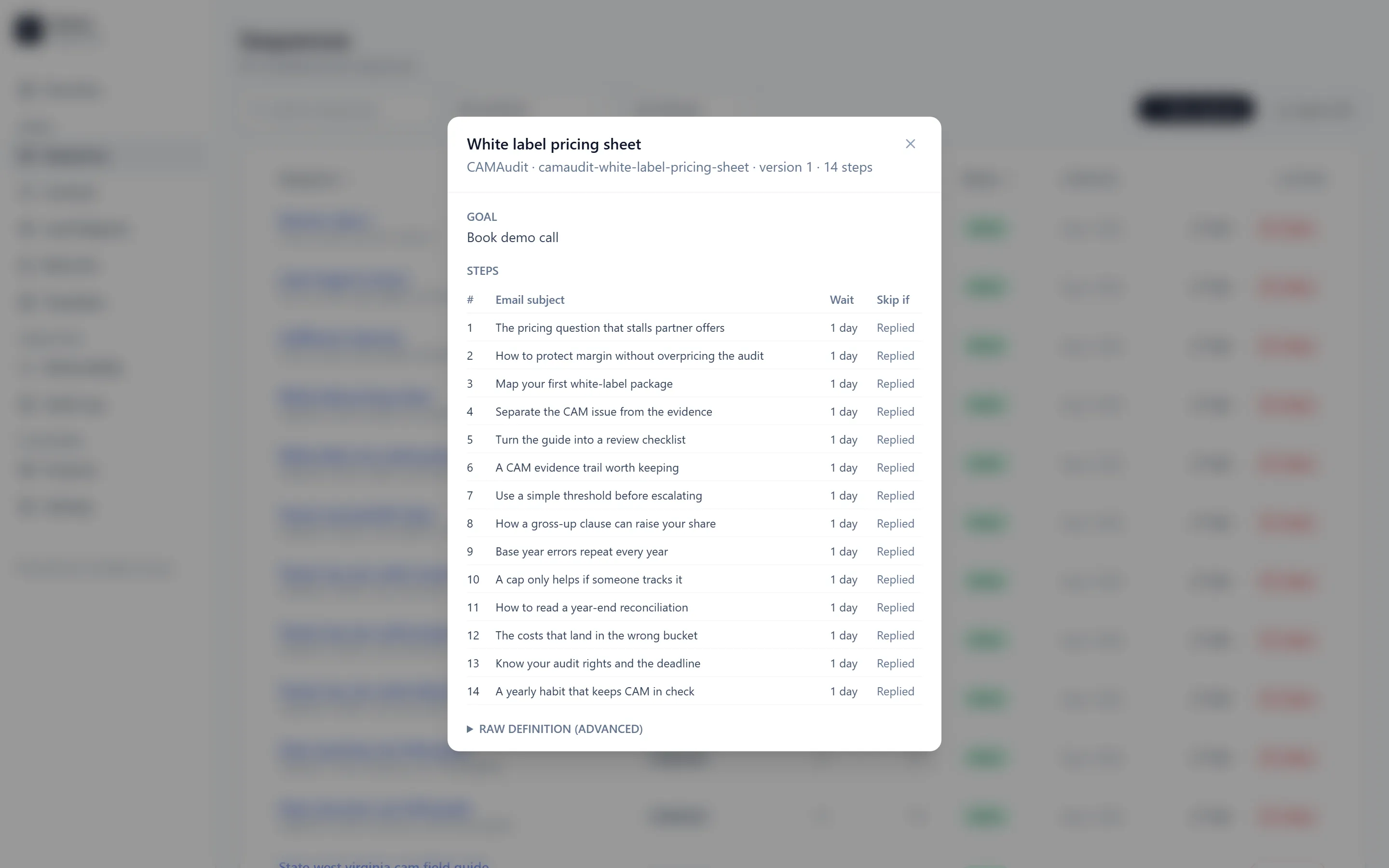
- 121 YAML sequences, 1,695 steps, schema- and policy-validated at build time
Provenance
Source portfolio/METRICS.md § Content
Measured
- Commit history
- 698 commits over 9 weeks (2026-05-11 to 2026-07-13), including at least 5 credited to the coding-agent identity AI Alex
Provenance
Source portfolio/METRICS.md § Numbers that are not checkable from this snapshot
Measured
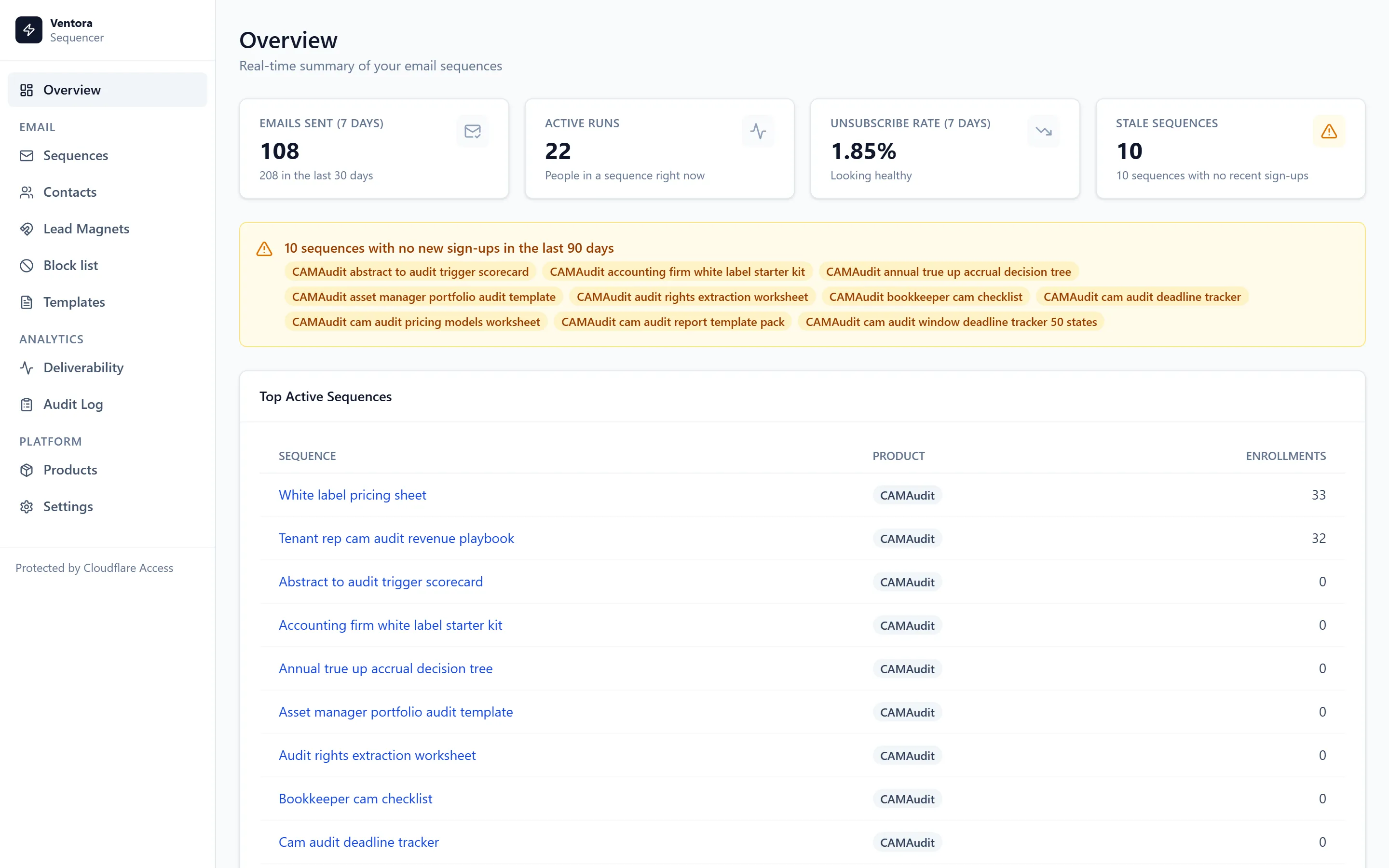
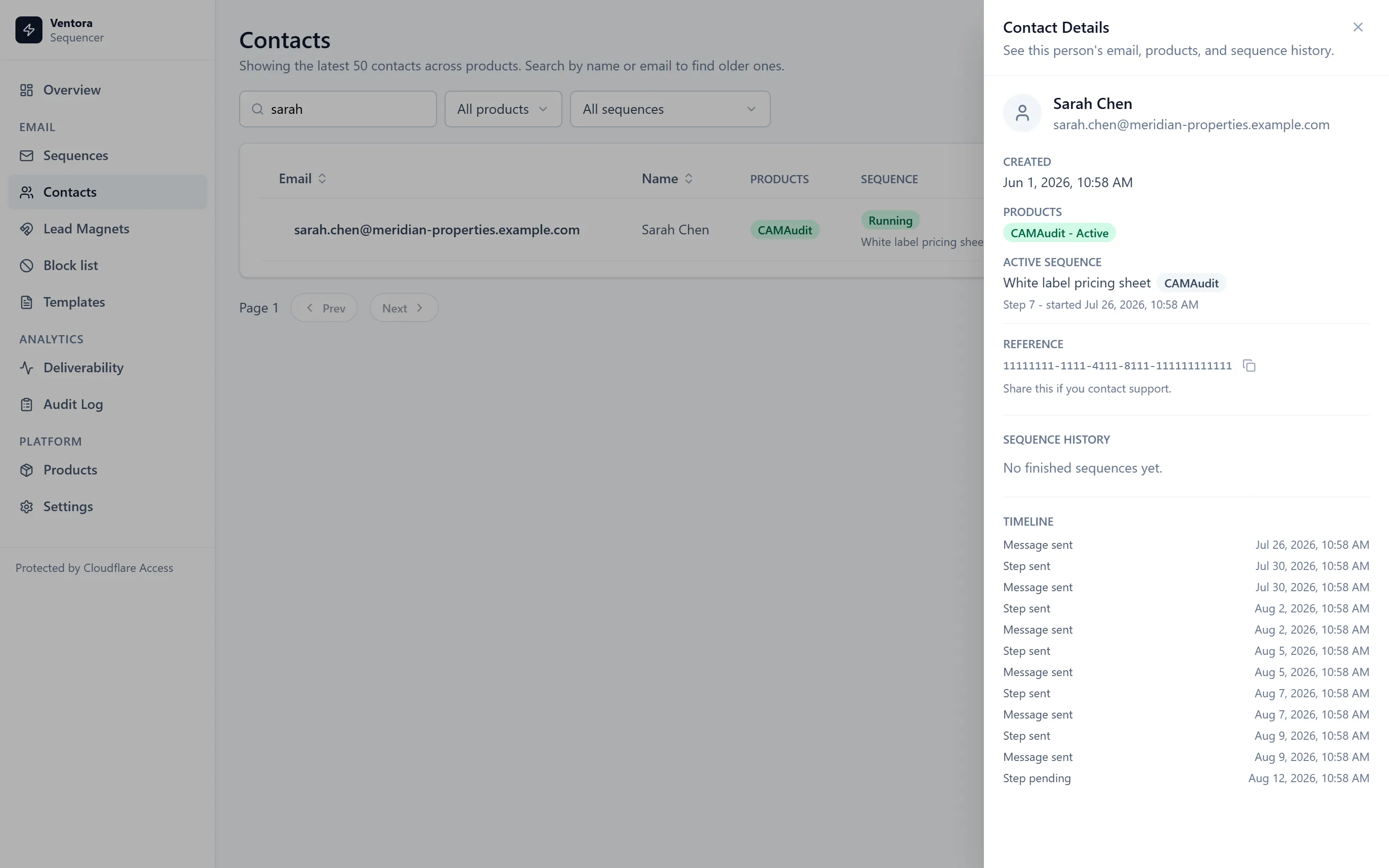
Screens
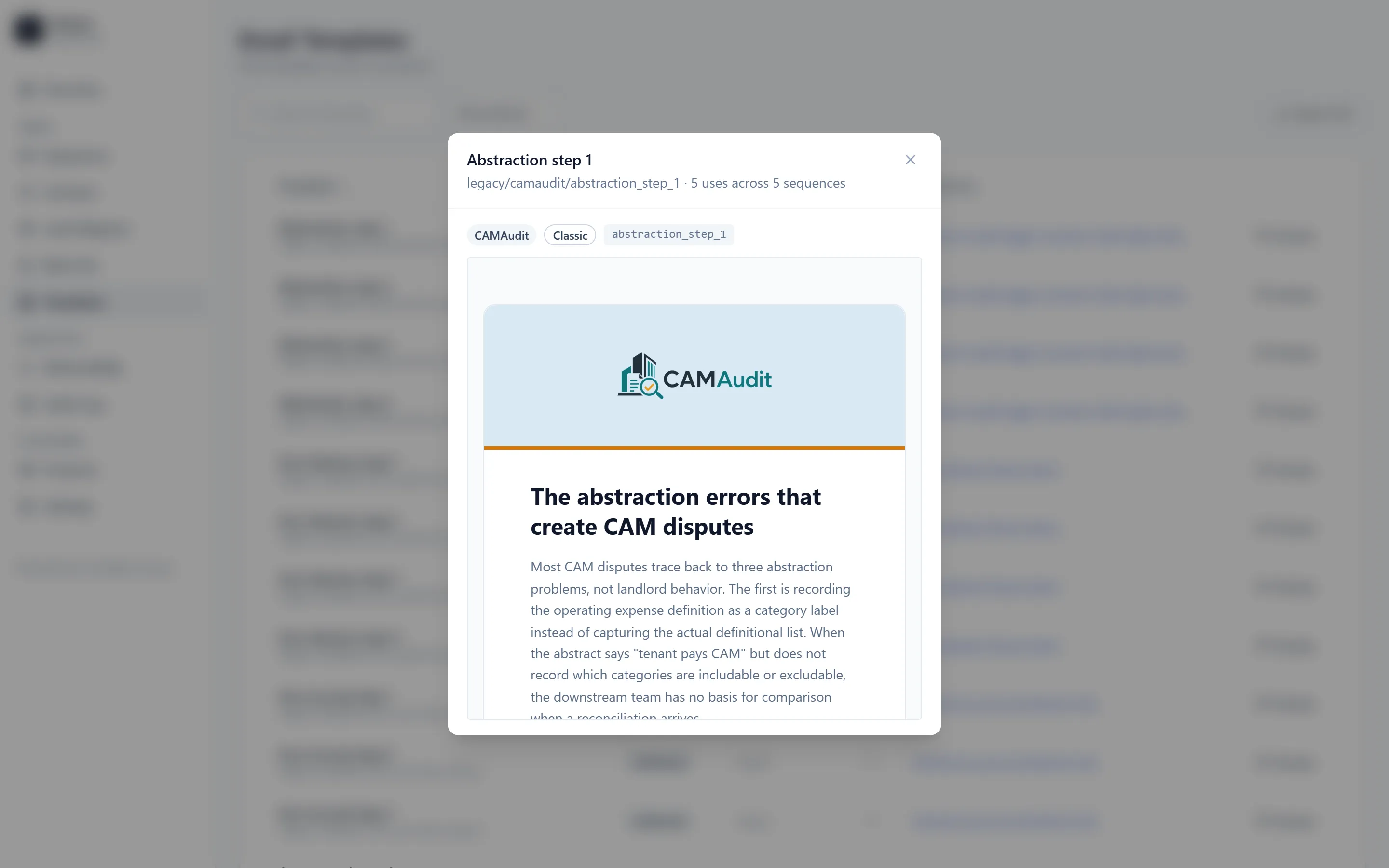
Its portfolio/ directory holds the architecture, metrics and testing documents these figures were taken from.