WorkThe .NET year
CapVeri
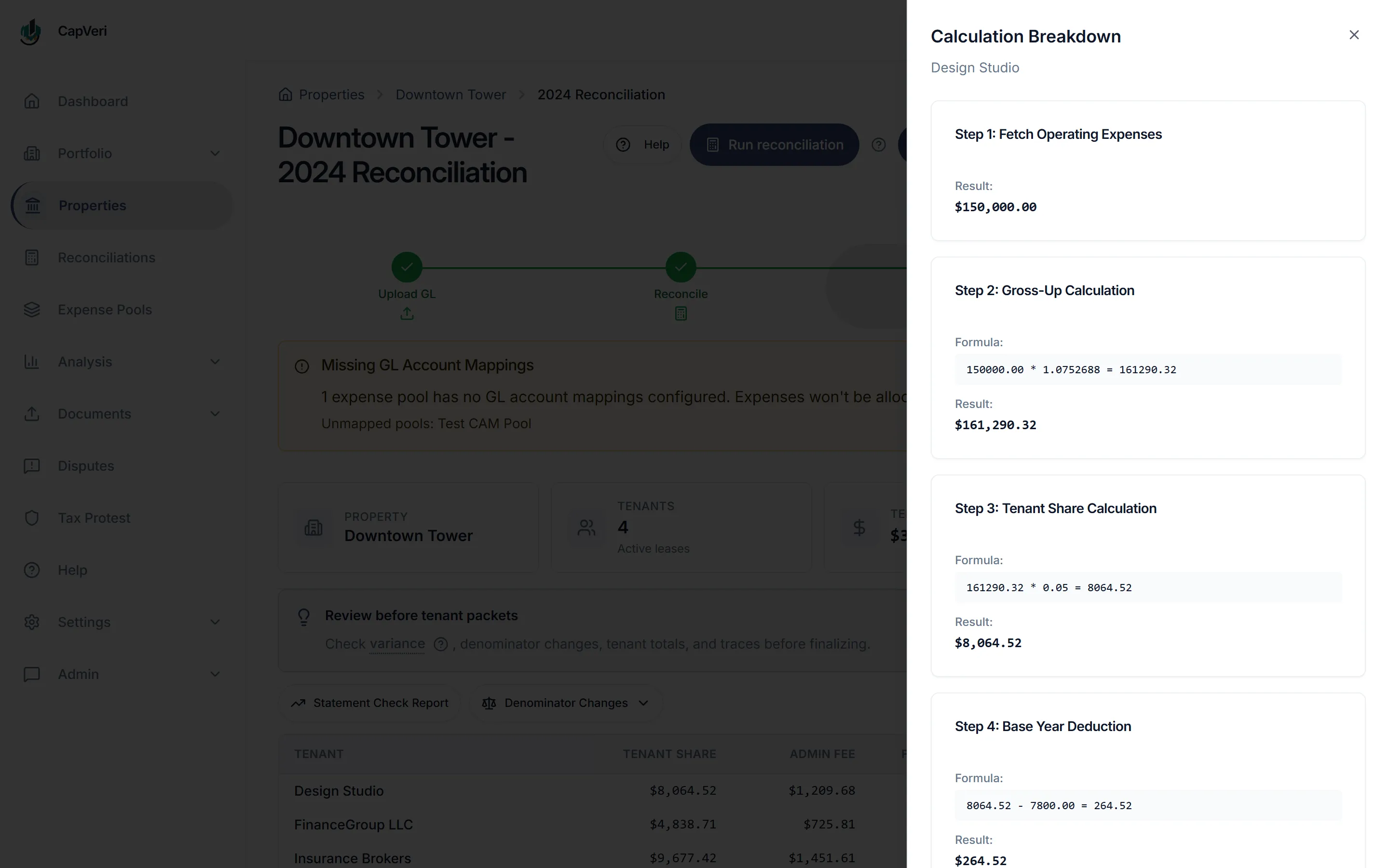
Worked out how much of a commercial building's running costs each tenant owed, and showed the arithmetic behind every figure.
- Ran on
- Railway and Vercel until June 2026, then Cloudflare Workers
- Ran
- December 2025 to July 2026
- Domain
- Commercial real estate
That platform choice is part of a longer migration: Azure, then Railway, then Cloudflare, across the whole estate. Read how and why.
Built with
- Cloudflare Workers
- Hono
- React 19
- TanStack
- Next.js
- OpenNext
- Supabase Postgres
- Python
Hosted services
- Railway
- Vercel
- Cloudflare Workers
- Queues
- Hyperdrive
- R2
- Supabase Postgres
The decision
CapVeri’s reconciliation engine was ported from Python to TypeScript, and the Python became a differential oracle: kept in the repository, under continuous test, deliberately never deployed, and checked against every change to the shipped TypeScript engine. Twenty-one property-based Hypothesis suites generated inputs across the money math and asserted that the two engines agreed on a tenant’s bill to the penny.
The written mandate governing the practice set a strict standard for what agreement could prove: “Matching the Python oracle is NOT automatically correct, AND diverging from it is NOT automatically a bug.” Every disagreement between the two engines was checked against lease language and accounting practice before it counted as a bug, with the ruling recorded at the call site.
That scrutiny is what makes the next fact matter. Five places were found where the TypeScript
engine deliberately disagreed with the Python reference, each adjudicated and recorded. The sixth
is the one the discipline was built to catch: a Stripe subscription-status mapper defaulted
unrecognized statuses to "active" access in both engines, so the two engines agreed and the
reconciliation was still wrong. A bug two independent implementations get wrong the same way is
exactly the class differential testing is supposed to be blind to, and it surfaced anyway.
A separate hardening pass through the same money-parsing code found a second bug from the same
family: a Unicode minus sign (U+2212), used in place of an ASCII hyphen in some source figures, was
dropped by the amount parser instead of read as a negative sign, turning a credit into a charge.
The fix widened the parser’s negative-sign handling to cover the Unicode minus alongside a bare -
and parenthesis notation.
The same idea outlived the product. CAMAudit v2 is a second engine for the same problem, started afterwards in a new repository from an empty tree rather than forked from this one, for the reason the Python oracle existed here: two independent implementations that agree are evidence a single implementation cannot produce on its own.
Architecture
Four independently deployed Cloudflare Workers ran in front of a single Supabase Postgres database,
with no origin server and no containers anywhere in the request path. capveri-app served a React
19 SPA and reverse-proxied /api/* to capveri-api, a Hono Worker holding 43 route modules, a
queue producer and consumer, and two Durable Objects.
capveri-marketing was a separate Next.js site built with OpenNext, 275 MDX pages deep.
Reconciliation and lease extraction ran as jobs on five typed Cloudflare Queues, two of them backed
by dead-letter queues, rather than inside a request/response cycle.
By the numbers
Each figure carries where it came from and when it was measured. Open one to see the command behind it, where the repository recorded a command.
- Application source
- 364,654 lines across 1,463 files
Provenance
Source portfolio/METRICS.md § Source vs test vs generated
Measured
- Test and end-to-end harness
- 534,150 lines across 1,381 files
Provenance
Source portfolio/METRICS.md § Source vs test vs generated
Measured
- Tests passing
- 16,758 across 1,115 files
Provenance
Source portfolio/METRICS.md § Measured runs
Measured
- Python coverage
- 95.51% total
Provenance
Source portfolio/METRICS.md § Coverage measured in the same runs
Measured
- Database
- 142 migrations, 63 tables, 394 RLS policy statements, 231 indexes, 66 functions
Provenance
Source portfolio/METRICS.md § Database
Measured
- Oracle parity suites
- 21 property-based Hypothesis suites, asserting the TypeScript engine against the Python reference to the penny
Provenance
Source portfolio/ORACLE.md § How parity is enforced
Measured
- Production stress program
- 104 scenario scripts driving the live API, with penny-exact expectations computed offline
Provenance
Source README.md § What's worth your time here
Measured
- Python test gate runtime
- cut from roughly 38 minutes to 379.06s (6m19s) on pytest's own timer, about 6x
Provenance
Source portfolio/METRICS.md § Measured runs
pytest -n 12 --dist loadscopeMeasured
- Commit history
- 5,242 commits over 125 active days, 2025-12-24 to 2026-07-03
Provenance
Source portfolio/METRICS.md § Git history
Measured
Screens
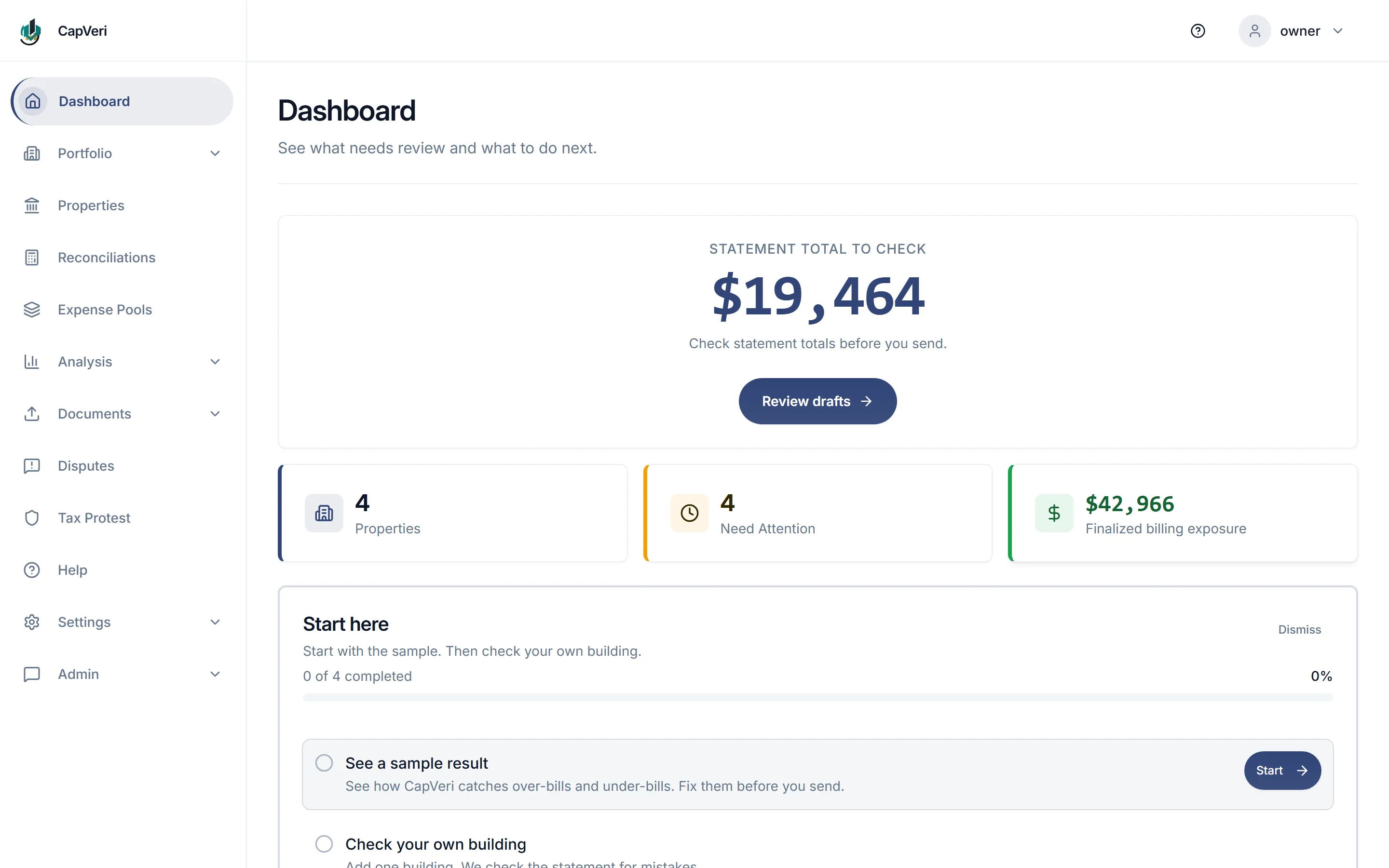
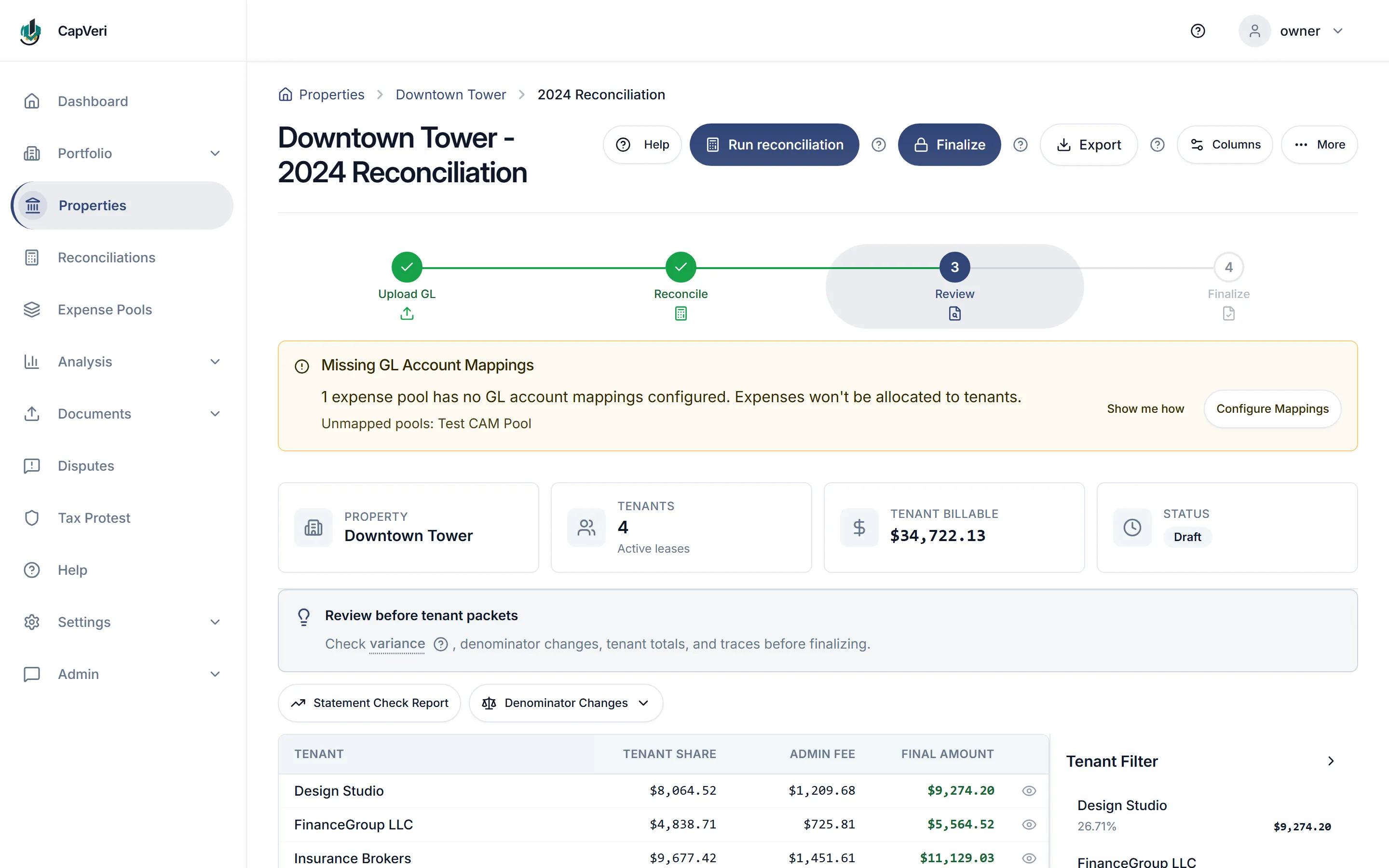
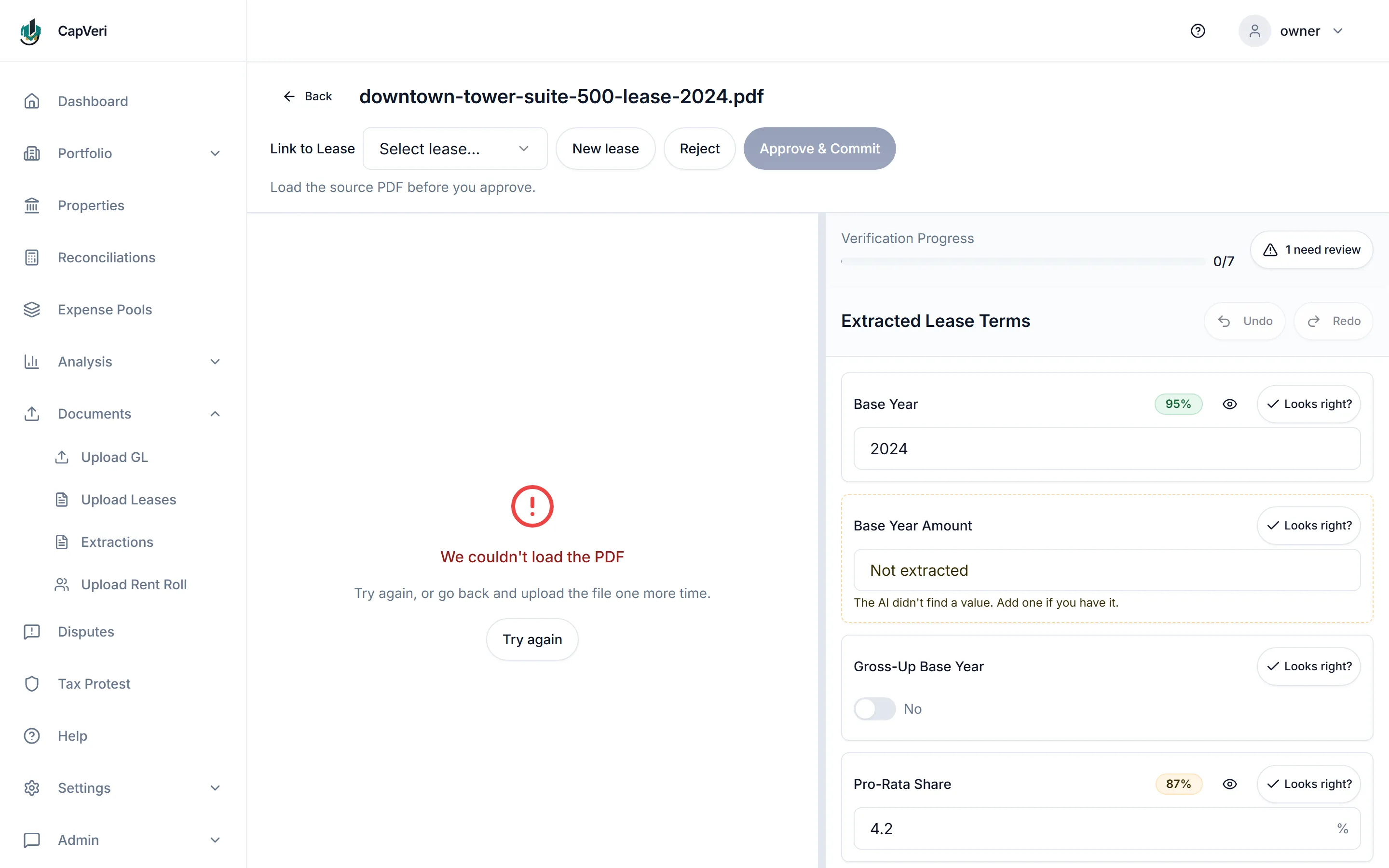
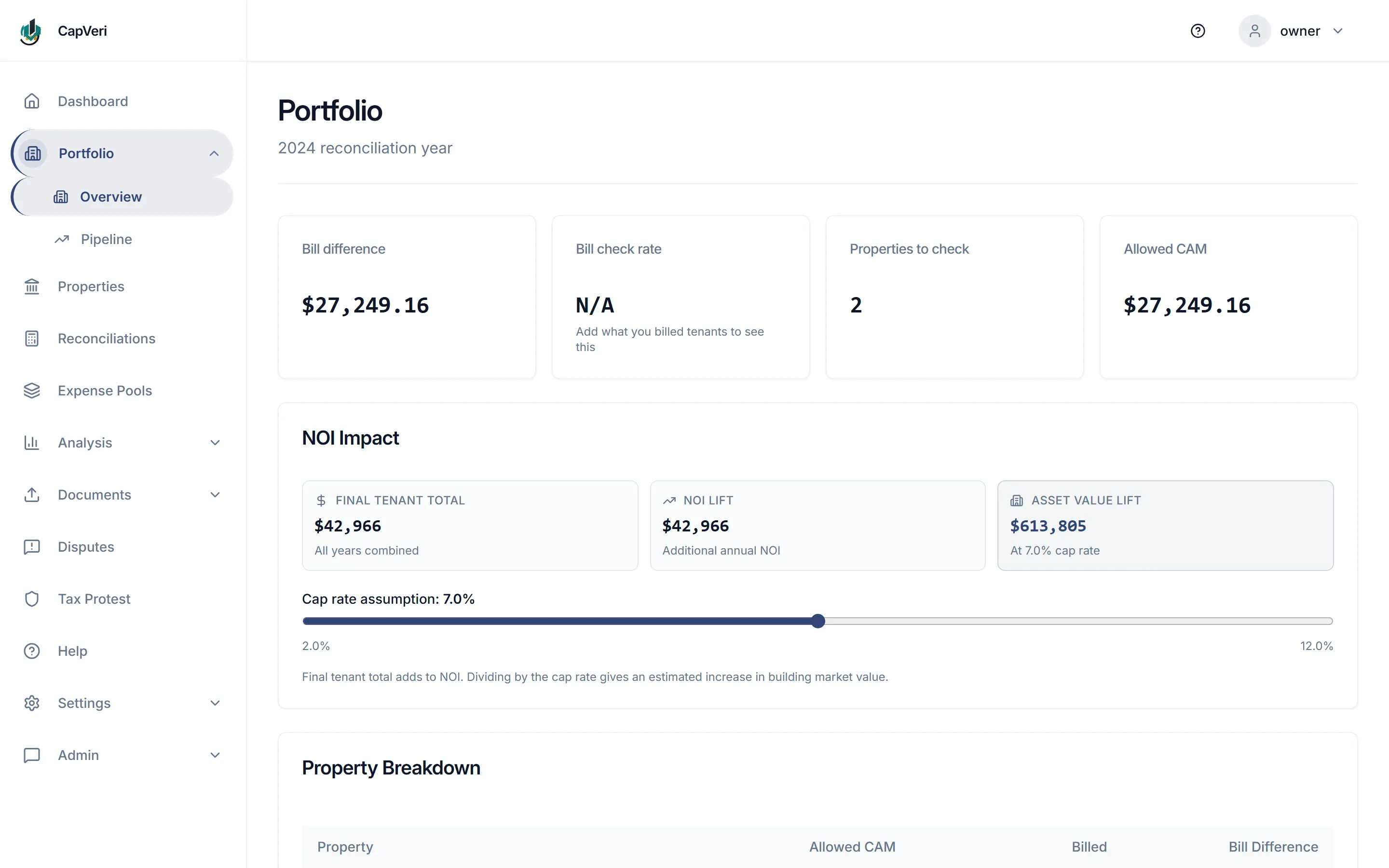
Its portfolio/ directory holds the architecture, metrics and testing documents these figures were taken from.